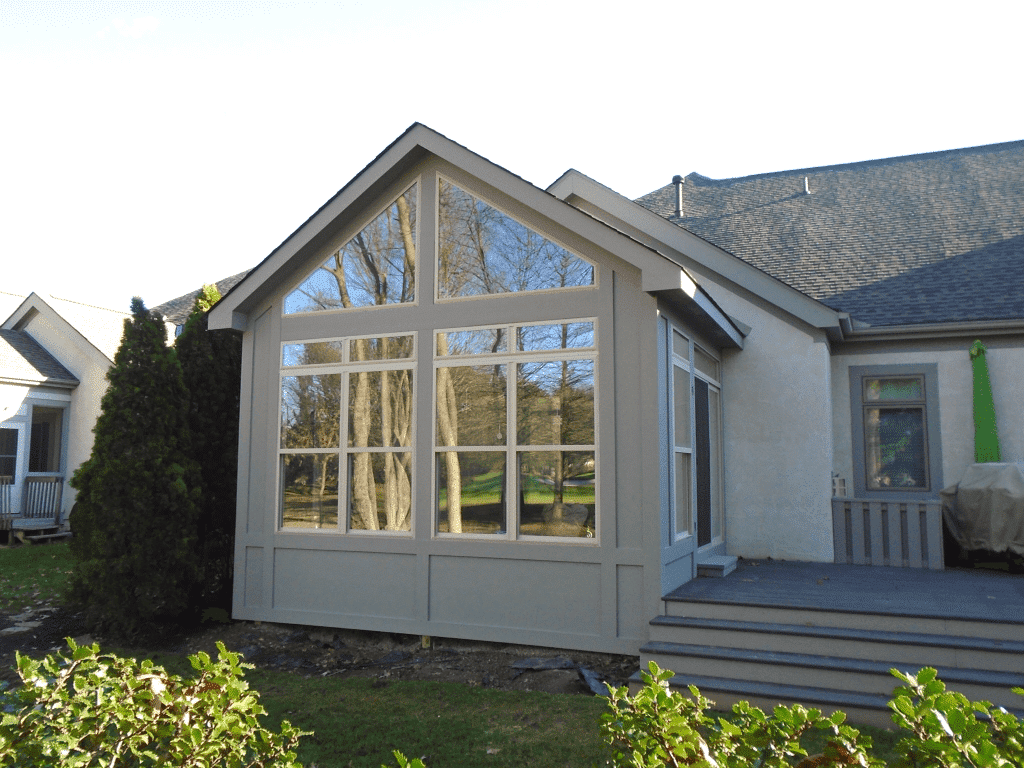
3-Season vs. 4-Season Sunroom: Which Is the Better Choice for Columbus Homeowners?
You want to get as much use out of your new sunroom as possible.
But is a full 4-season build actually worth it for your situation? Would a 3-season build be more fitting?
It’s one of the most common questions we hear at Suncraft, and as Jeff Borovetz, our president with over 40 years in the business, puts it, the answer isn’t always obvious until you see the space.
The right choice comes down to how you plan to use the room, your budget, and what Central Ohio winters really demand of a structure like this.
We’re here to help you figure out which option actually fits your life.
3-Season vs. 4-Season Sunroom Differences
The names give it away, but the differences go deeper than just a few extra months of use.
A 3-season sunroom is built for comfortable living from spring through fall. It has windows that open and close to let in the breeze, protect against rain, and take the edge off a cool October evening. 3-season sunrooms are not insulated for winter comfort.
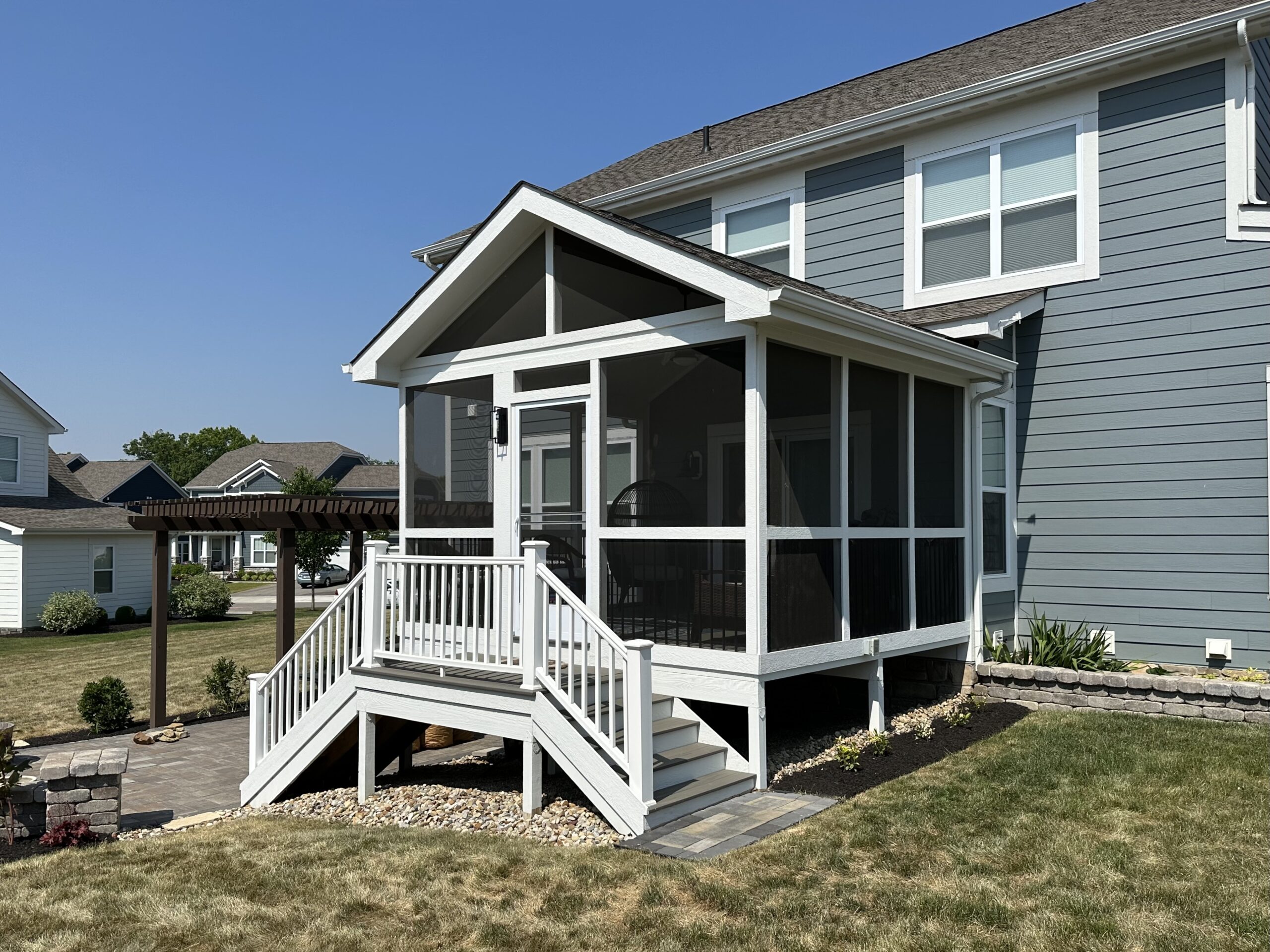
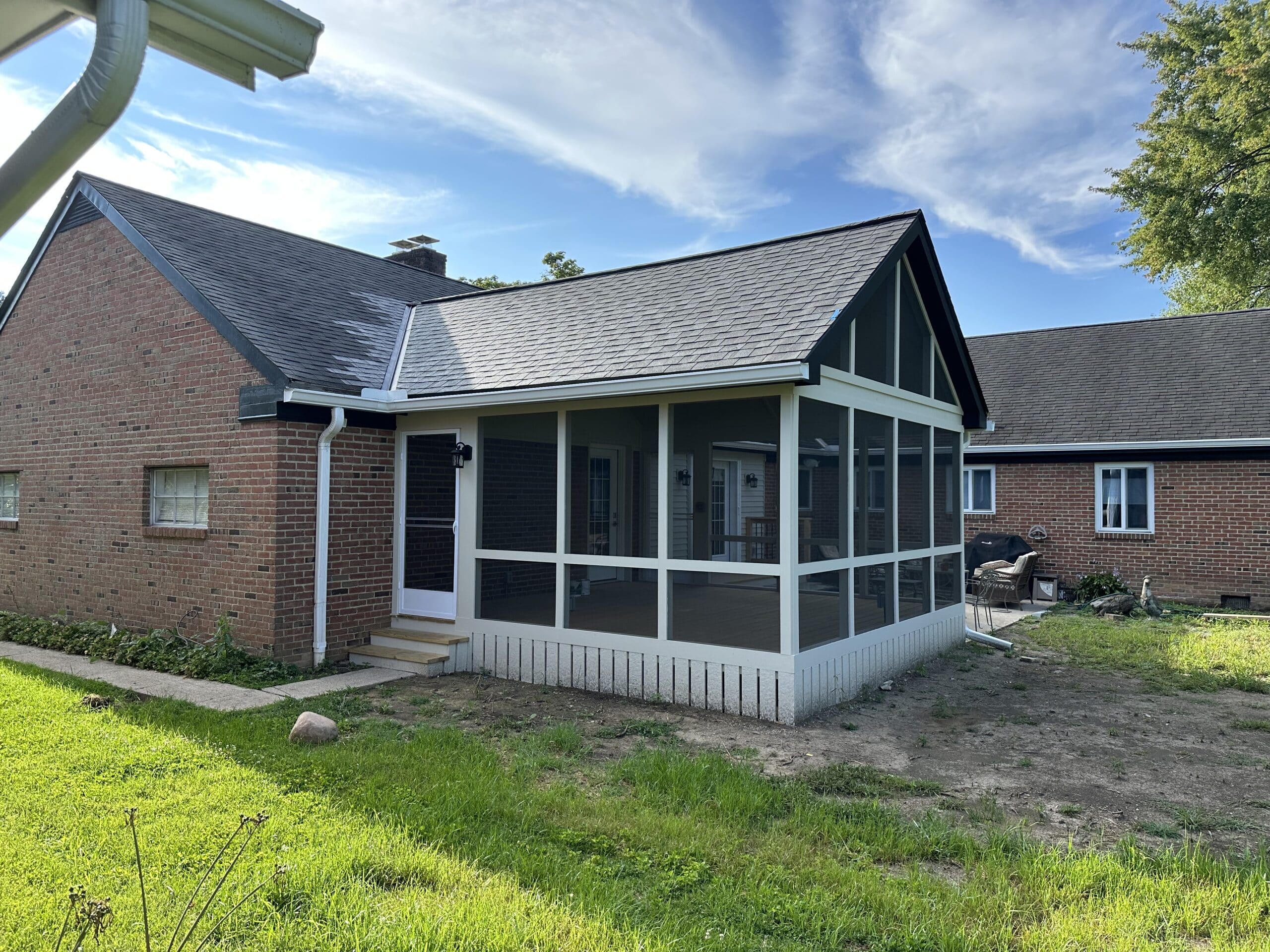
Here’s an example of a 3-season sunroom:
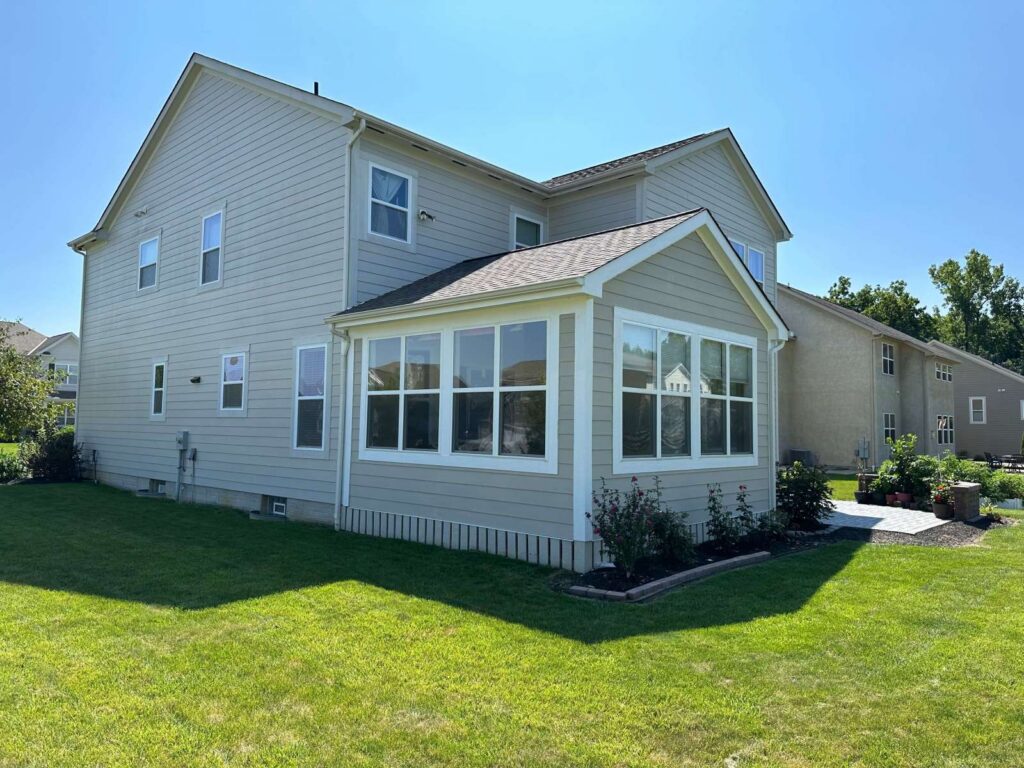
3-season sunroom features: Lots of windows with screens; no insulation; no heat or AC. A door remains between the house and sunroom. Designed for seasonal use. You could add a space heater to provide heat on chilly days/nights.
A 4-season sunroom is a different animal. It’s fully insulated; we add a heat/AC unit that provides comfort in the warmer and colder seasons.
However, during the coldest months, a 4-season sunroom may not be as warm as your house. tied into your home’s heating and cooling system, and built to be just as comfortable in January as it is in July.
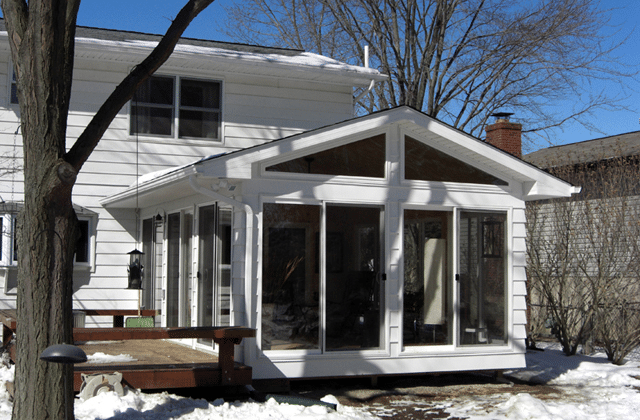
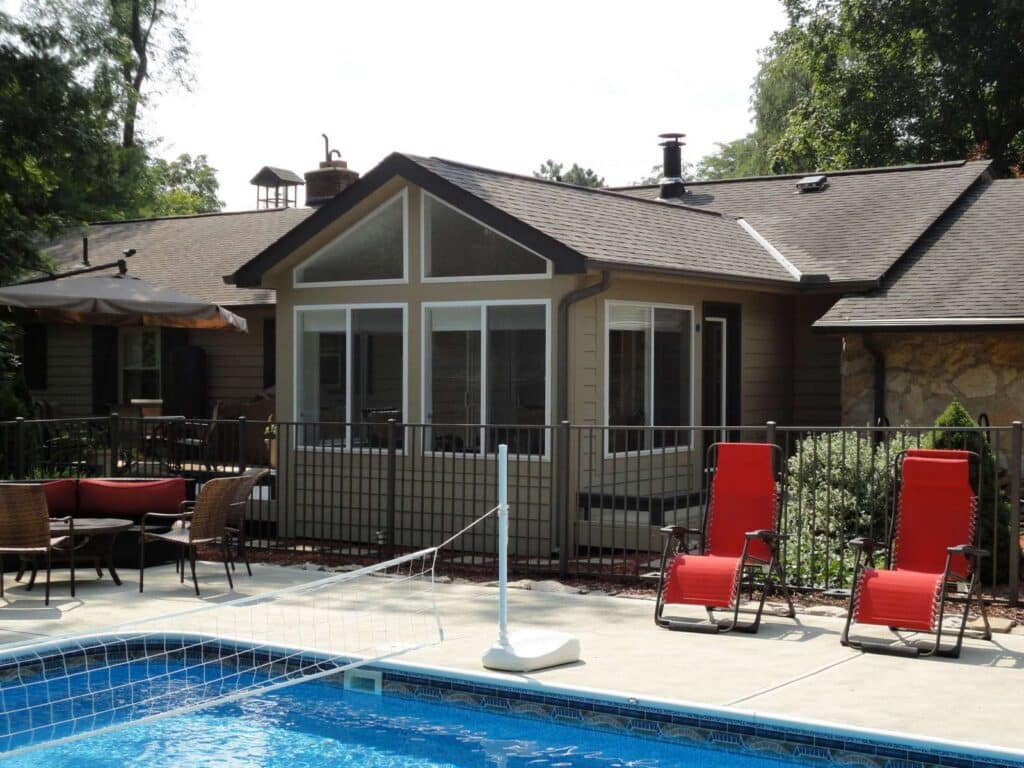
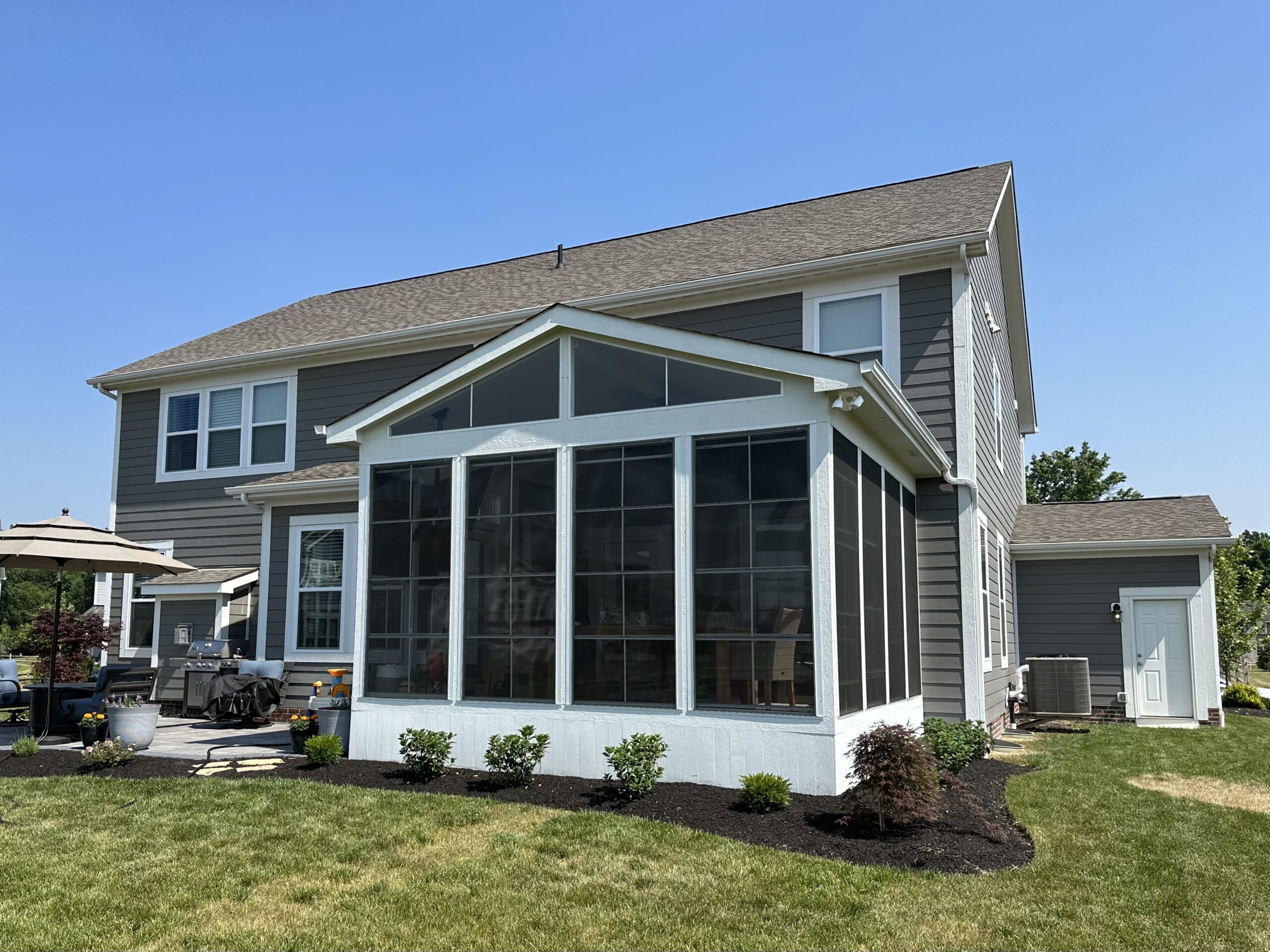
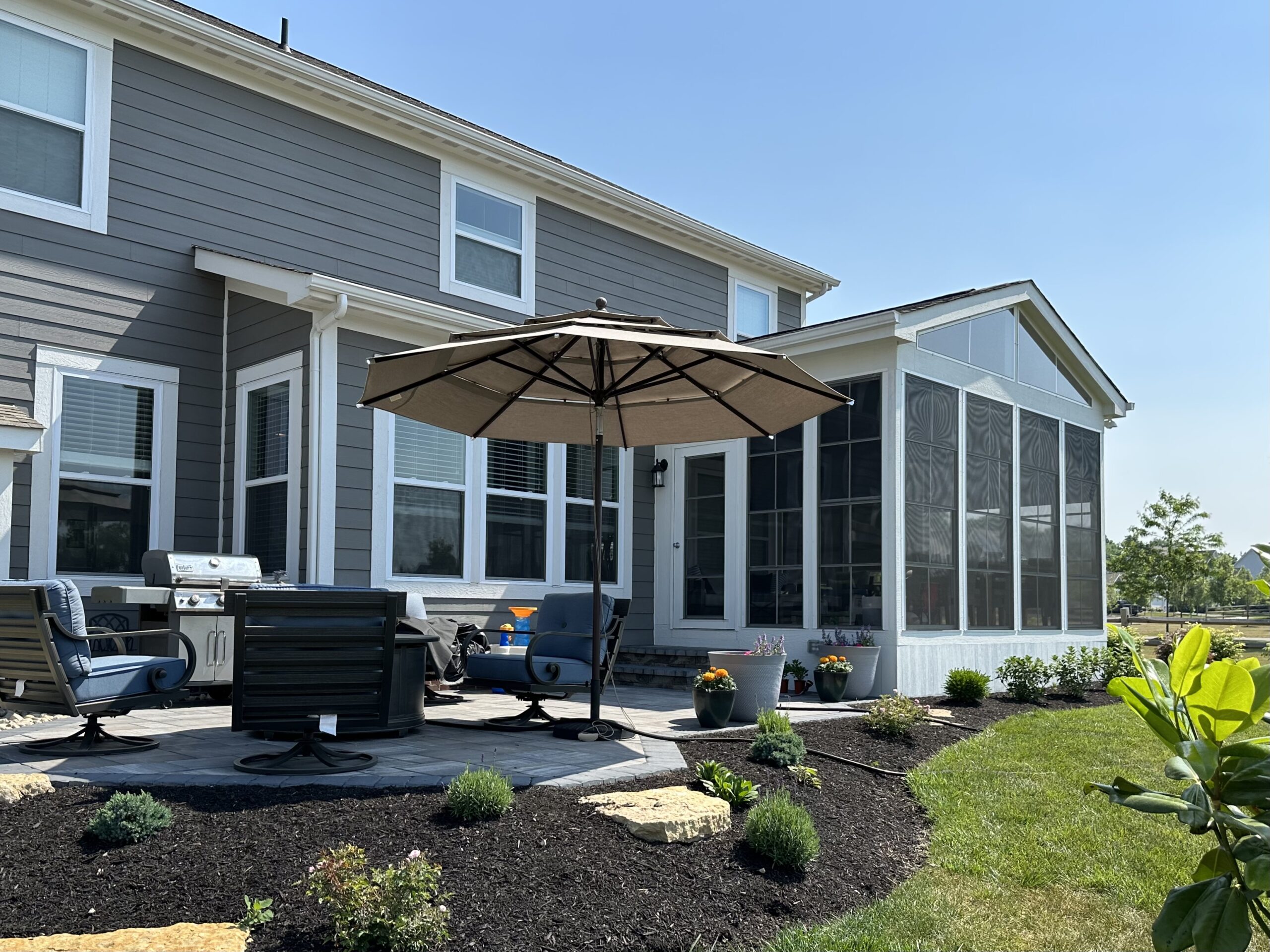
Here’s an example of a 4-season sunroom:
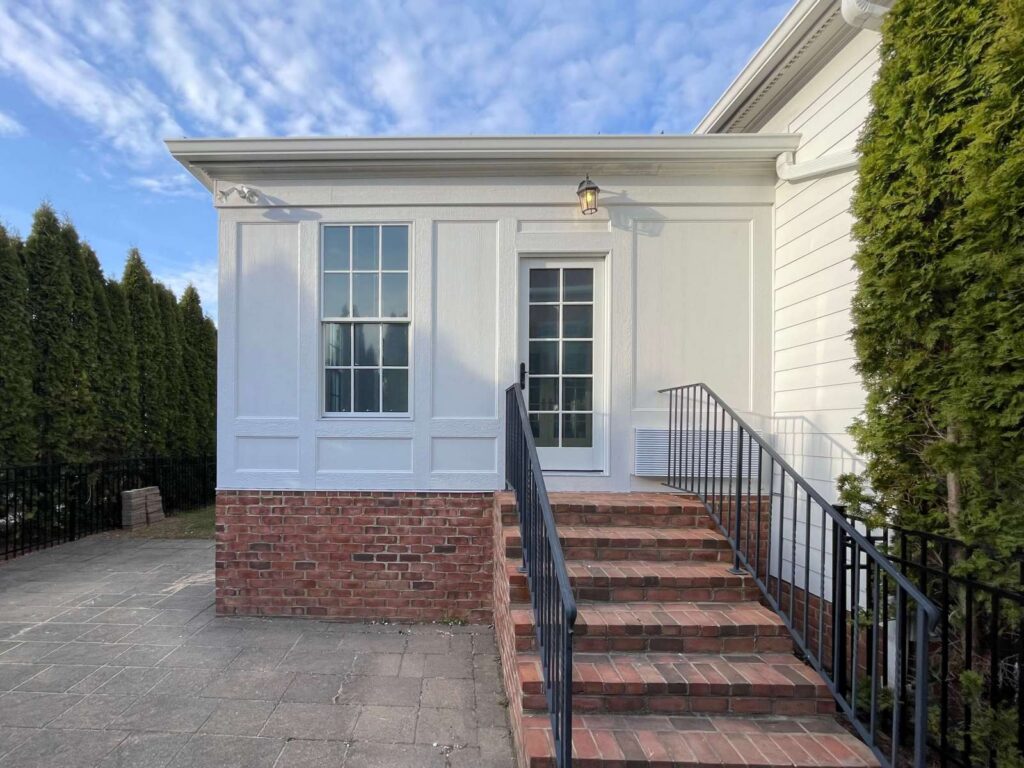
4-season sunroom features: Lots of windows with screens and insulation in the floor, walls, and roof. Includes a supplemental heat/AC unit. A door remains between the house and the sunroom. Provides seasonal comfort but may not be adequate during the coldest days of winter.
Those structural differences also mean different permitting requirements. Trust us, this can feel like a headache if you’re navigating it on your own.
At Suncraft, we handle all of it regardless of which direction you go. Permits, inspections, approvals, warranty, all of it.
How the Build Affects the 3-Season vs. 4-Season Sunroom Decision
The actual construction of a 3-season vs. 4-season sunroom must be considered before you make your decision.
A 4-season sunroom requires more from the structure itself. The walls and ceiling need proper insulation, and we add a heat/AC unit for comfort.
However, if you want true year-round use, we recommend adding a “room addition,” which is constructed like your house with a concrete block foundation, heavier insulation, drywall, and ductwork connected to your existing HVAC system.
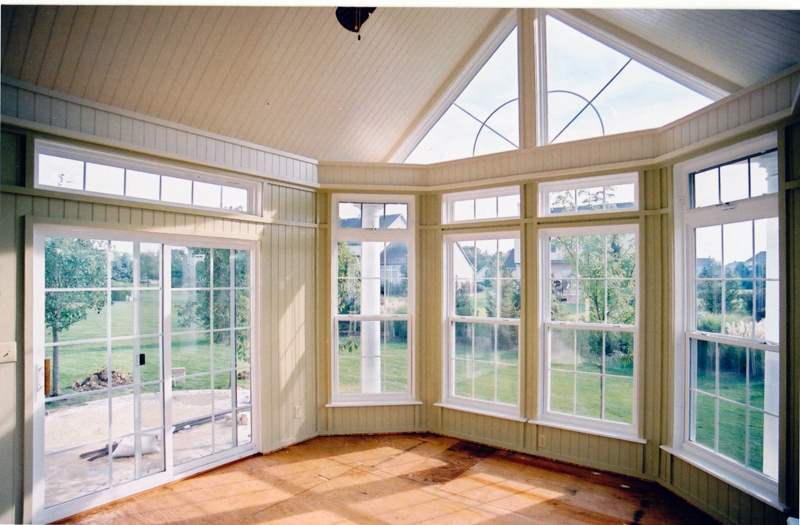
A 3-season build is simpler. There is typically no HVAC integration, no insulation requirements, and less coordination with your home’s existing systems.
Although the process for a 3-season sunroom build is simpler, the same design standards, quality of materials, and attention to how the room connects to and complements your home apply.
Both 3-season and 4-season sunroom builds generally take 3-6 weeks to complete.
If you choose to work with us, the entire process from design to build is streamlined, no matter which option you choose, because design and construction happen under one roof. And we always match the existing architecture of your home, including roofing and exterior finishes, with non-prefabricated materials.
4-Season Sunroom vs. Room Addition Differences
If the year-round appeal of a 4-season sunroom is resonating, you might be wondering: so what’s the difference between that and just adding a room onto the house?
A room addition is an extension of the house itself. It has a concrete block foundation, full insulation, drywall, HVAC: everything your existing living space has.
Here’s an example of a room addition:
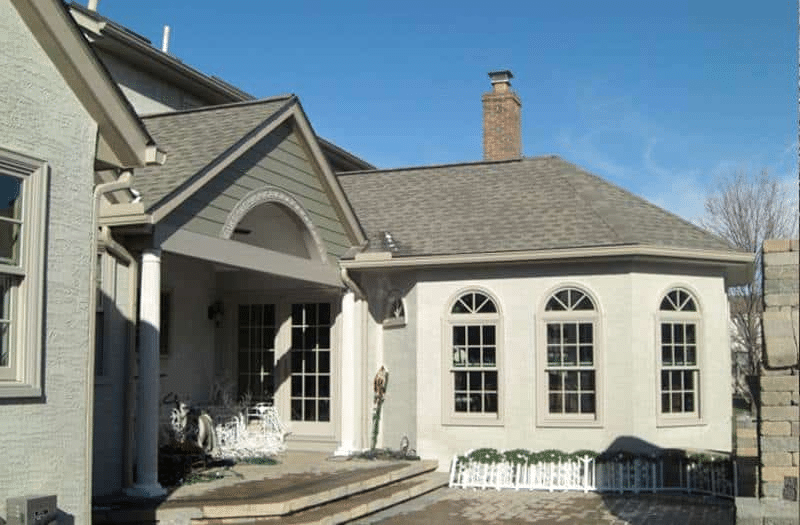
Room addition features: Windows with screens, heavier insulation, concrete block foundation, HVAC connected to existing supply, and no door between the house and addition. A true home addition providing year-round comfort.
Simply put, a room addition isn’t a sunroom with better windows. It’s more integrated with your house. Walk into it, and you’d never know it wasn’t part of the original structure.
Now, just because we’re saying “a sunroom is a sunroom,” doesn’t mean that a well-built 4-season sunroom can’t be as livable as a room addition. It’s all about the design.
When choosing between the two, the difference is what you want the space to feel like when you’re in it.
- Do you want a bright, glass-wrapped retreat that brings the outside in?
- Or do you want a bedroom, a family room, a mother-in-law suite that just happens to be new?
Both are valid. Since we build both sunrooms and room additions, our conversations with homeowners start with what they actually want the space to do for them before we get into products and pricing.
How the Columbus Climate Reality Affects Your Sunroom Choice
Columbus, Ohio, doesn’t get the credit it deserves for its winters. November through March here is legitimately cold.
If you’re planning on a 3-season room, that’s roughly six to nine months of comfortable use in a good year, and that’s being generous. March and October can go either way, and early November has a way of arriving faster than anyone expects.
We’ve watched enough Columbus winters come and go to know that the shoulder seasons are where most homeowners feel the gap.
For homeowners who don’t want to deal with the fluctation of the weather, a 4-season sunroom is at least worth the conversation.
4 Questions Homeowners Should Ask Themselves Before Choosing a Sunroom
Before getting into specs and materials, the best thing you can do is get honest about how you actually plan to use the space.
Here are four questions to consider, so you make the right purchase the first time around:
1. Do I want to use this space in January, or just when the weather is nice?
This is the one that matters most. If your honest answer is that you’ll be perfectly happy closing the door on it from November through March, a 3-season room may be all you need. If the thought of losing it for five months feels like a dealbreaker, then we’d recommend a 4-season sunroom.
2. Will this be an everyday living space or a seasonal hangout?
There’s a difference between a room you use daily to drink your morning coffee and one that gets heavy use in summer but sits idle in the winter. Generally speaking:
Daily use = Room addition
Seasonal use = 3-season
3. Am I entertaining year-round or mostly in warmer months?
If you host Thanksgiving, have people over for the big game, or just want a space that works for guests regardless of the season, that’s a 4-season conversation. If your entertaining peaks in summer and winds down by October, a 3-season room serves that well.
4. What does my budget allow?
A 4-season sunroom is a bigger investment than a 3-season build, and that’s a real factor. You shouldn’t buy more than you need. Whatever you build should actually fit the way you live, at a price that makes sense for you. We understand the need for homeowners to stick to a budget. That’s why we typically price our sunrooms less than our competitors with no hidden costs or surprise fees.
What Sunroom Most Suncraft Customers End Up Choosing and Why
After 48 years of building sunrooms across Columbus, we’ve had the “3-season vs. 4-season sunroom” conversation more times than we can count.
Through those countless conversations, we’ve found a clear pattern in how homeowners make the call between a 3-season sunroom, a 4-season sunroom and a room addition.
The answer rarely comes down to the sunroom itself. It comes down to the homeowner. Each homeowner is unique in:
- How they live.
- What they value.
- What they picture when they imagine actually using the space.
The customers who get the most out of their investment are almost always the ones who had that candid conversation early, before anything was designed or quoted.
That’s the conversation we start with on every project: what does this space need to do for you, and how do we make sure it actually does it?
Once you have the answer to that, then all of the other factors follow.
Our process: To figure out the best sunroom for you, we typically come to your house, take measurements, and share ideas (with photos if necessary) so you can envision what it looks like before giving you a quote. If you decide to move forward, we’ll then draw up detailed plans and review them with you.
Take Advantage of a Free Design Consultation Before Choosing
A 3-season vs. 4-season sunroom is not an easy decision to make. When you’re talking about permanent additions to your home, careful evaluation of all relevant factors should be considered.
Our Suncraft experts will walk you through the decision before a single thing is designed or built.
The consultation is free, so there’s no pressure and no hard sell.
We’ll give you an honest opinion about what fits your home, lifestyle, and budget, so you can make the call on which direction to go.
Give us a call or fill out our online form to get started.
Related Posts